The second engine: how to train your gut for 120 g of carbs per hour
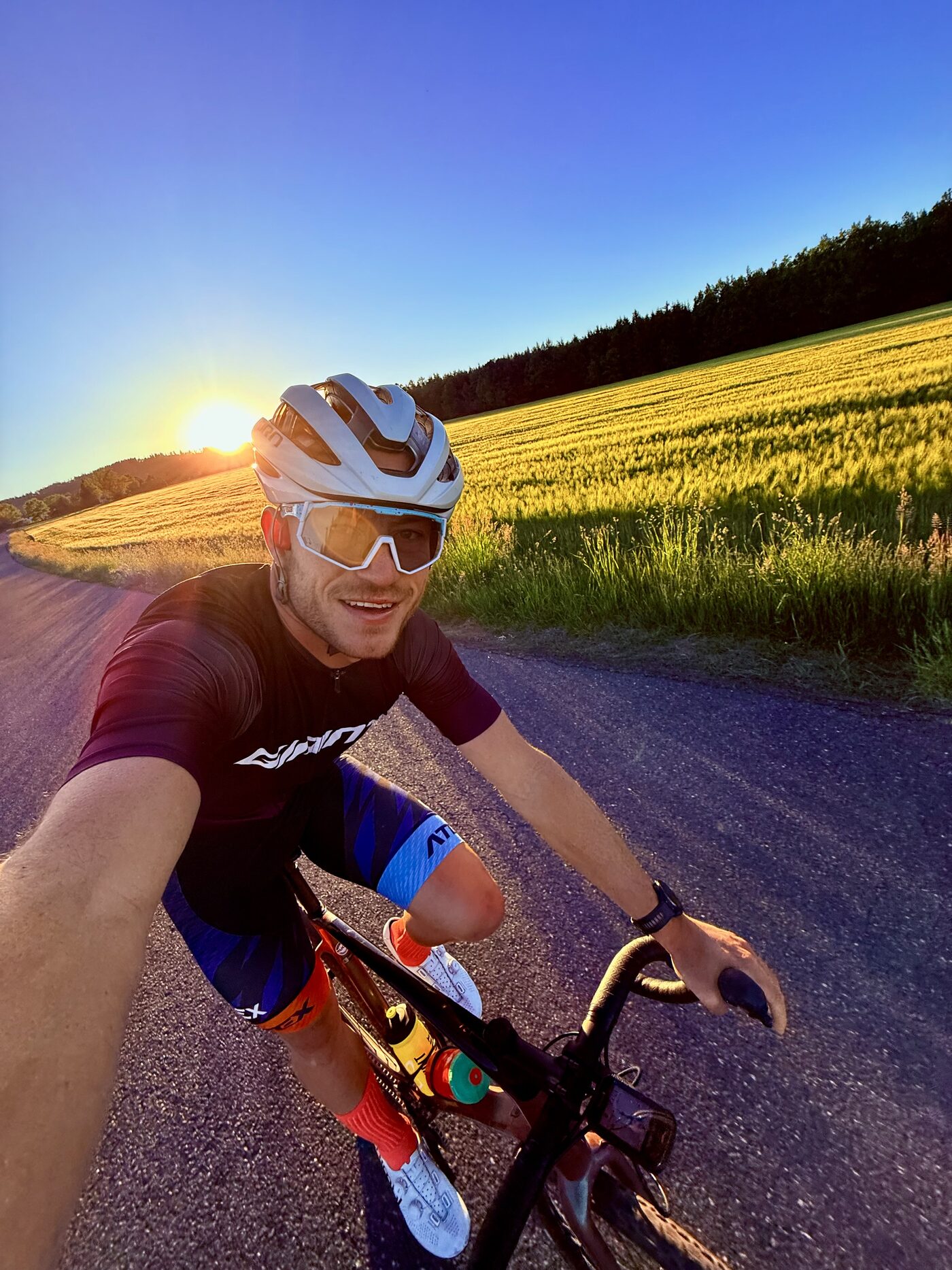
You can have the best legs on the start line and the best form of the season. But if your gut can't take in enough energy, the race falls apart — not from a lack of fitness, but from an empty tank.
In endurance sport, energy is fuel. The body only holds a carbohydrate (glycogen) store for roughly 60–90 minutes of truly hard work. For races longer than an hour and a half, one thing therefore decides: how much energy you can keep topping up without feeling sick.
Why simply eating more isn't enough
For a long time the rule was “a maximum of 60 g of carbs per hour”. The reason is physiological: ordinary sugar (glucose) is absorbed in the gut by one type of transporter, and these get “clogged” at higher intakes. The excess then sits in the stomach, ferments and brings cramps or diarrhoea. But science has shown that when you add fructose to the glucose, you use a second absorption pathway — and intake can be raised to 90 or even 120 g per hour. Hence the roughly 2:1 glucose-to-fructose ratio you'll find on most racing gels today.
The gut isn't a fixed fate. It's a muscle you can train.
The gut trains like legs
And here's the key message: the ability to absorb carbohydrates is an adaptation. When you regularly expose the gut to a higher intake, it increases its number of transporters and learns to process more fuel without trouble. Someone who trains “dry” and eats 100 g of sugar for the first time in a race ends up at the toilet. Someone who has drilled it just rides.
How to do it in practice
Progress systematically and never in jumps:
- Start where you are. Find out how much you tolerate now (say 40–50 g/h) and add in small steps each week.
- Train the gut in long sessions. Longer workouts are the ideal “test lab” for gels, drinks and solid food.
- Use a glucose + fructose mix (~2:1 ratio) and plenty of fluids — concentrated sugar without water causes trouble.
- Rehearse the race scenario. Same nutrition, same timing as your target race. No surprises on the day.
Nutrition is a discipline just like swimming, cycling and running — it's just often forgotten. And yet it's one of the biggest hidden reserves of performance, fully in your hands. Train the second engine and your tank won't run dry at the finish.
In WOHLMACHINE programs we treat training and the energy strategy as one system — because one doesn't work without the other.
Choose a program